
How to Lower Your AC Electric Bill: 12 Proven Ways
Cut summer cooling costs without sweating. 12 changes ranked by payback period, with worked math on what each one actually saves.
_1779220400871-BTmzb4Mz.jpg)
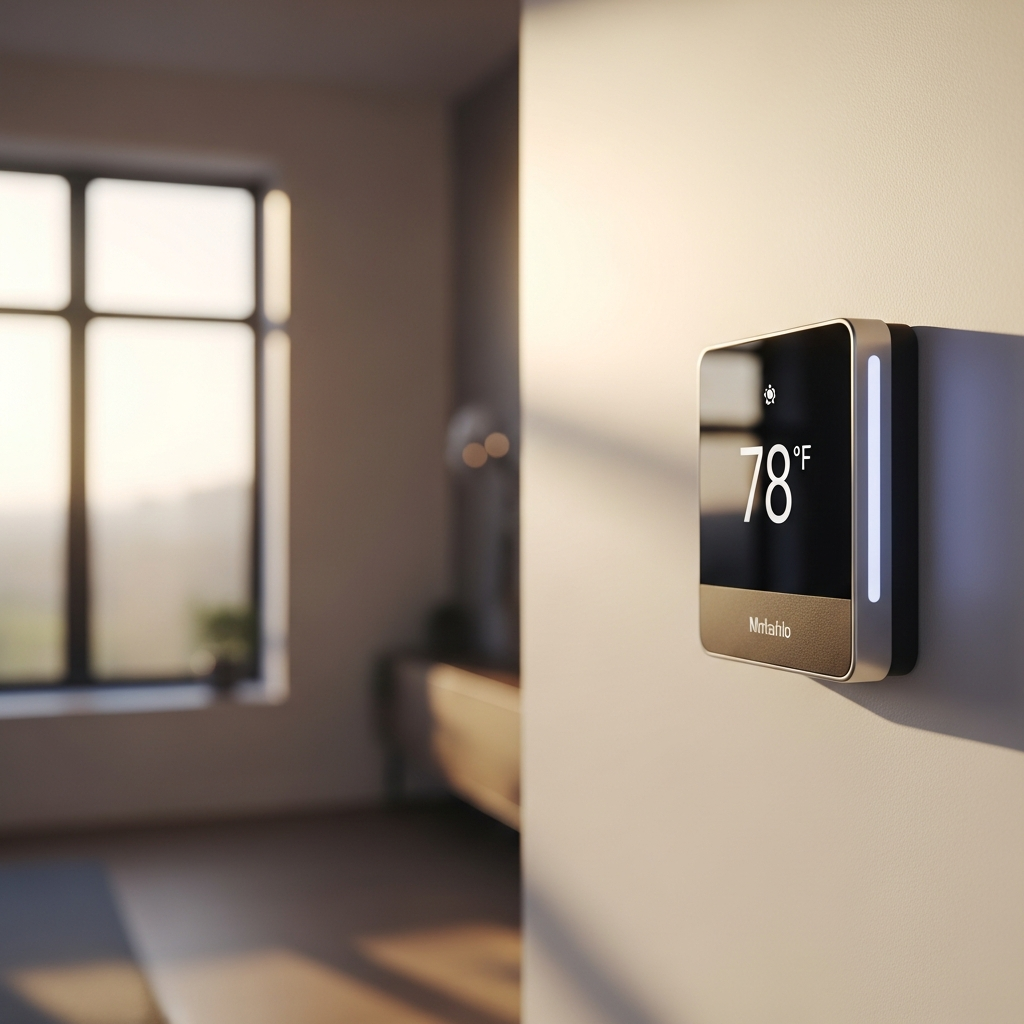
Last August a neighbor showed me a $387 electric bill and asked if her AC was broken. It wasn't. She had her thermostat set to 70°F, the fan on ON, ceiling fans off, and a 3-ton condenser walled in by overgrown boxwoods. Two weeks and zero dollars in equipment later, her next bill was $241. Most cooling-cost problems are not equipment problems. They're settings, habits, and small maintenance items adding up.
Below are 12 changes ranked by payback period (free and immediate first, equipment upgrades last) with worked math on what each one saves a typical household.
Quick answer
Set the thermostat to 78°F when you're home, 85°F when you're not. Set the fan to AUTO, not ON. Replace your air filter every 1 to 3 months and rinse the outdoor coil every spring. Use ceiling fans (counter-clockwise in summer) so you can raise the thermostat 4°F without feeling warmer. Together these four free changes typically cut summer bills 20 to 35 percent.
1. Set the Thermostat to 78°F (Free, Saves 6 to 18%)
The single biggest lever. The U.S. Department of Energy recommends 78°F when home, 85°F when away or sleeping. Every degree you raise the setpoint above 72°F saves roughly 3 percent on cooling costs.
Worked example: A home spending $200/month on summer cooling with the thermostat at 72°F. Raising it to 78°F (6 degrees) saves about 18 percent, or $36/month. Across a 5-month cooling season, that's $180 a year for zero dollars and zero effort.
If 78°F sounds hot, give your body two weeks. Most people fully acclimate to a 78°F setpoint within 10 days, especially with a ceiling fan running (see #4).
Repair or replace?
Compare free quotes from licensed contractors near you.
2. Set the Fan to AUTO, Not ON (Free, Saves 5 to 15%)
This one frustrates me because it's free and most homeowners don't know it. When your thermostat fan is set to ON, the blower runs 24/7, even when the compressor isn't cooling. Three things happen:
- The blower motor pulls 400 to 800 watts continuously, adding $15 to $30/month to your bill.
- Between cooling cycles, the fan blows room-temperature (or attic-warmed) air through the ducts, which feels like warm air at the vents.
- The moisture sitting on the indoor coil after the compressor shuts off gets re-evaporated back into your house. Your dehumidification work gets undone every cycle.
Switch to AUTO. The fan runs only when actively cooling. Your house will feel cooler and dryer at the same thermostat setting.
3. Replace Your Air Filter Every 1 to 3 Months (Saves 5 to 15%)
Per the DOE, a clogged filter can raise cooling energy use by up to 15 percent. The blower works harder to pull air through a packed filter, and the evaporator coil eventually freezes, dropping capacity even further.
Worked math: a $4 filter changed every 2 months costs $24/year. On a $1,000/year cooling bill, even a modest 8 percent savings from clean filters is $80. The filter pays for itself three times over.
Sign up for filter delivery from Amazon, FilterEasy, or Costco so you stop forgetting. I have boxes of filters stacked in my garage and replace mine on the 1st of every other month.
4. Run Ceiling Fans Counter-Clockwise (Cheap, Saves 4 to 8%)
A ceiling fan doesn't lower the air temperature, but the wind-chill effect makes you feel 4°F cooler. That means you can raise the thermostat from 74°F to 78°F without anyone noticing, which is a 12 percent cooling savings.
In summer, blades should spin counter-clockwise (looking up) so air pushes down on you. Switch the direction reverse on the side of the motor housing. Only run fans in rooms you're actually in; an empty room's ceiling fan just wastes electricity since there's no person for the wind-chill to act on.
A typical ceiling fan uses 15 to 90 watts depending on speed (vs. a 3,500 to 5,000 watt AC compressor), so the savings math always works out.
5. Pull the Curtains on West and South-Facing Windows (Free, Saves 3 to 10%)
Direct sun through a single-pane window adds about 200 BTU per square foot of glass per hour. A 30 sq ft west-facing window in afternoon sun = 6,000 BTU/hour of extra load, which is the same as turning on a small space heater. Closing curtains or blinds during peak afternoon sun (1 p.m. to 6 p.m. local time) blocks 30 to 60 percent of that gain.
Better options if you're investing: cellular blackout shades, reflective window film (3M makes good options under $30 per window), or exterior solar screens. Per ENERGY STAR, window treatments can cut solar heat gain by up to 65 percent.
Repair or replace?
Compare free quotes from licensed contractors near you.
6. Rinse the Outdoor Condenser Coil Every Spring (Free, Saves 10 to 25%)
The outdoor unit dumps your home's heat into the outdoor air. When those aluminum fins are clogged with cottonwood fluff, pollen, grass clippings, or dog hair, heat can't escape efficiently. Capacity can drop 20 to 40 percent on a badly fouled coil, and the compressor runs much longer to compensate.
How to do it: shut off the disconnect on the wall, flip the breaker, brush off loose debris, then rinse the fins from the inside out with a garden hose on a gentle setting. No pressure washer. Trim back any plants within 2 feet. Total time: 20 minutes. See our full HVAC maintenance checklist for the rest of the seasonal routine.
7. Seal Duct Leaks (Cheap to Moderate, Saves 10 to 20%)
The average U.S. home loses 20 to 30 percent of conditioned air through duct leaks, per ENERGY STAR. If your ducts run through an unconditioned attic or crawl space, every leak is dumping cold air into a hot attic and pulling hot attic air into the return.
DIY fix: check accessible ducts for visible gaps at joints. Seal with UL 181-rated mastic or foil tape (NEVER use duct tape, despite the name; it fails within a year on actual ducts). Cost: $20 to $50 in materials.
Insider tip: When inspecting ducts in an attic, run your hand around every joint while the system is running. You'll feel cold air leaks instantly. The biggest leaks I find are almost always at the connection between the air handler and the supply plenum (the first 3 feet) and at the boots where ducts drop down to ceiling vents. Those two locations are where I'd start.
8. Install a Smart or Programmable Thermostat ($100 to $250, Saves 5 to 10%)
A programmable thermostat that bumps the setpoint up 7 to 10°F when you're at work or asleep saves 5 to 10 percent on cooling, per the DOE. Smart thermostats (Nest, Ecobee, Honeywell) add geofencing and learning algorithms to do this automatically.
ENERGY STAR-certified smart thermostats save the average household about 8 percent annually, or roughly $50/year. Payback period: 2 to 4 years. Many utility companies offer $50 to $100 rebates that drop payback to under a year. Check the ENERGY STAR rebate finder for your zip code.
9. Add Attic Insulation ($500 to $2,000, Saves 10 to 20%)
Heat builds up in your attic on sunny days. An uninsulated or under-insulated attic can hit 130 to 160°F, and that heat radiates down through your ceiling. Per DOE recommendations, attics in most U.S. climate zones should have R-49 to R-60 insulation. Most homes built before 2000 have R-19 to R-30 at best.
Worked math: upgrading from R-19 to R-49 in a 1,500 sq ft attic costs $1,200 to $2,000 (DIY blown-in fiberglass or cellulose) and typically cuts annual cooling and heating bills by 15 percent. On a $2,000/year HVAC bill, that's $300/year, a 4 to 7 year payback. Many states offer rebates that shorten this further; check DSIRE for your area.
10. Run Heat-Producing Appliances at Night ($0, Saves 2 to 5%)
Your oven, dishwasher, dryer, and stovetop dump significant heat into your house. Running them during peak afternoon heat means your AC works harder. Shift them to after 8 p.m. when possible:
- Bake in the morning or evening, not 2 p.m.
- Run the dishwasher overnight with the heated-dry option off
- Use a grill outside in the evening instead of the indoor stove
- Dry clothes on a line, or at least not at peak temp hours
This also helps if your utility has time-of-use rates (most California, Arizona, and many Northeast utilities). Electricity at 4 p.m. can cost 2 to 3x what it does at 10 p.m. Use the DOE's time-based rate guide to see if your utility offers one.
11. Schedule a Professional Tune-Up ($100 to $200, Saves 5 to 15%)
An annual spring AC tune-up catches problems that quietly waste electricity: a 10 percent low refrigerant charge, a weakening capacitor, a slightly miscalibrated thermostat, a dirty blower wheel. A real tune-up should include measured values (capacitor microfarads, refrigerant pressures, temperature drop across the evaporator coil) not just a visual inspection.
Payback math: a $150 tune-up that recovers 8 percent efficiency on a $1,000/year cooling bill returns $80, plus avoids one $400+ emergency call when something fails on July 15. Worth it. See our maintenance checklist for what to expect.
12. Replace an Old AC with a High-Efficiency Model ($4,000 to $10,000+, Saves 20 to 50%)
The big one. If your AC is over 12 years old and was originally SEER 10 or 13, replacing it with a modern SEER2 16 to 20 unit cuts cooling costs 20 to 40 percent. As of 2026 the federal minimum is SEER2 14.3 (15.2 for single-package systems in the southwest) per the DOE energy conservation standards.
Worked example: home spending $1,200/year on cooling with a SEER 10 unit. Upgrading to SEER2 18 cuts that to about $720, saving $480/year. On a $7,500 installed cost, payback is 15+ years on energy alone, which is why replacement on a working old unit is rarely justified by efficiency savings alone. But when a major repair is already on the table, the efficiency savings tip the math toward replacement. See our repair vs replace guide for the full framework.
Also factor in federal tax credits: the Inflation Reduction Act offers up to a 30 percent tax credit (capped at $600/year for AC, $2,000/year for heat pumps) per the ENERGY STAR federal tax credit page. Estimate your specific cost with our HVAC replacement calculator.
Quick Savings Reference
| Change | Upfront Cost | Typical Savings | Payback |
|---|---|---|---|
| Raise thermostat to 78°F | $0 | 6 to 18% | Instant |
| Fan to AUTO | $0 | 5 to 15% | Instant |
| Replace air filter | $4 to $25 | 5 to 15% | First month |
| Use ceiling fans | $0 (if installed) | 4 to 8% | Instant |
| Close curtains in sun | $0 | 3 to 10% | Instant |
| Rinse condenser coil | $0 | 10 to 25% | Instant |
| Seal duct leaks | $20 to $50 | 10 to 20% | 1 to 2 months |
| Smart thermostat | $100 to $250 | 5 to 10% | 2 to 4 years |
| Attic insulation | $500 to $2,000 | 10 to 20% | 4 to 7 years |
| Shift appliances off-peak | $0 | 2 to 5% | Instant |
| Annual tune-up | $100 to $200 | 5 to 15% | First season |
| Replace old AC (SEER2 18+) | $4,000 to $10,000+ | 20 to 50% | 10 to 18 years |
What NOT to Do
A few "tips" that pop up online and are either useless or actively harmful:
- Don't close vents in unused rooms. Modern central systems are designed for a specific airflow. Closing more than 20 percent of vents raises static pressure, strains the blower, and can freeze the evaporator coil. If you want to cool zones differently, install a zoning system with motorized dampers.
- Don't crank the thermostat way down when you're hot. Setting it to 65°F doesn't cool the house any faster. The system cools at one rate. All that does is make it overshoot and run longer.
- Don't put electronics or lamps near the thermostat. Heat from a TV, lamp, or sunlight hitting the thermostat tricks it into running longer than needed.
- Don't pay for "annual refrigerant top-offs." Refrigerant lives in a sealed loop. If it's low, you have a leak that needs finding, not just refilling. Some shady contractors sell "refrigerant additions" every spring; that's a sign to find a new contractor.
Putting It All Together
If you do only three things from this list, do these: set the thermostat to 78°F, set the fan to AUTO, and change the filter. Those three changes are free, take 60 seconds, and typically cut summer bills 15 to 30 percent on their own. Then add ceiling fans, sun-blocking curtains, and the spring condenser rinse for another 15 to 25 percent.
If your system is over 12 years old and your bills still seem high after all the above, run your serial number through our free HVAC age tool and read our repair vs replace guide. Sometimes the cheapest long-term move is upgrading a tired old system. For related reading, see the seasonal maintenance checklist, AC sizing guide, and how a central AC actually works.