
Why Is My AC Blowing Warm Air? 7 Causes and How to Fix Each
AC blowing warm air? These 7 causes cover 90% of cases — from a wrong thermostat setting to low refrigerant — with exact DIY fixes and when to call a pro.
_1779220400871-BTmzb4Mz.jpg)
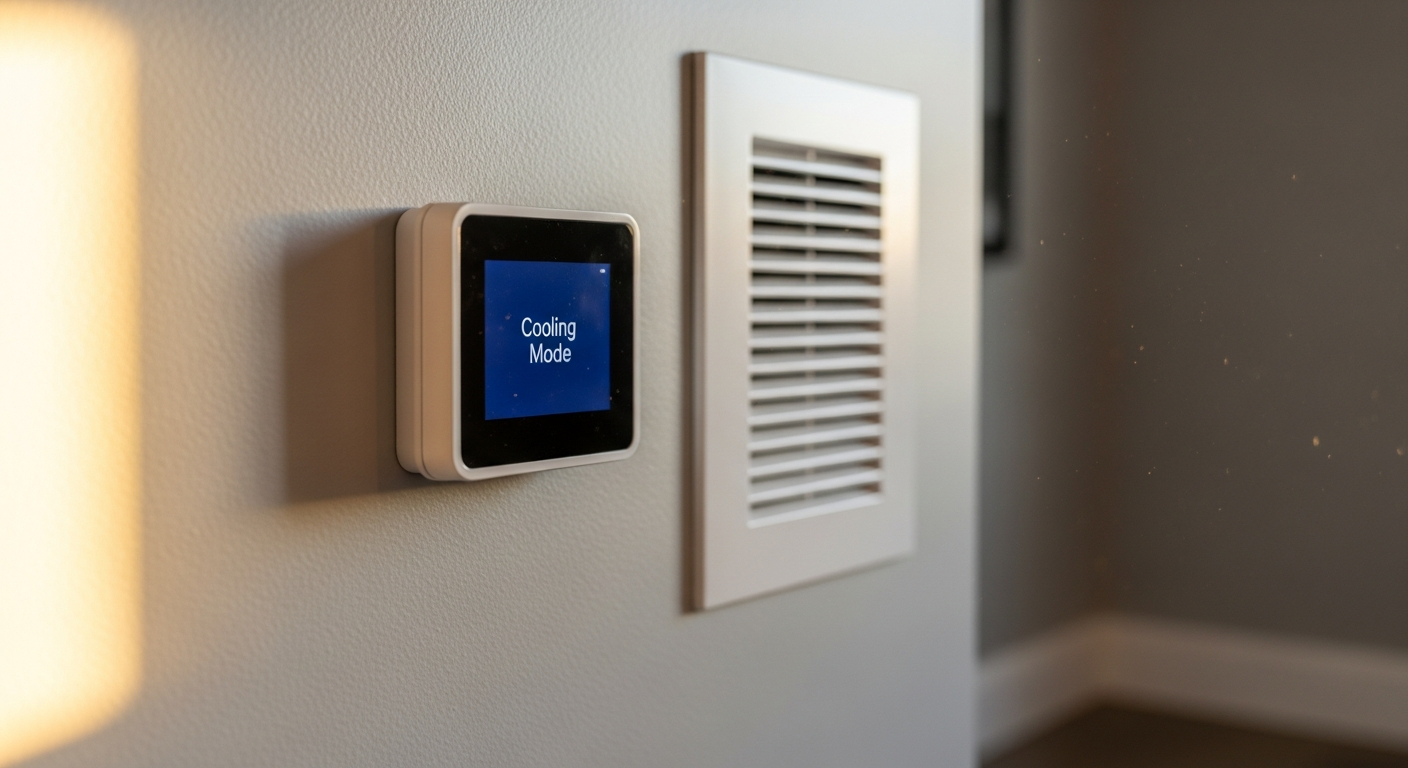
Picture this: it is 6 p.m. on a 95-degree Wednesday, you walk in from work, and the air coming out of the kitchen vent feels like a hair dryer. The unit outside is humming, the blower inside is moving air, and yet nothing is cold. Before you call anyone, work through this list. About 4 in 10 "warm air" calls I get turn out to be a thermostat setting or a clogged filter, both fixable in under 5 minutes for free.
Have a heat pump? Some of this still applies, but heat pumps run a defrost cycle that blows warm air for a few minutes at a time — that is normal and not a malfunction. If you are not sure which system you have, run our free serial number lookup and it will tell you.
Quick answer
Check the thermostat: MODE = COOL, FAN = AUTO. Check the filter. Walk outside and look at the condenser. If the outdoor unit is silent, suspect a tripped breaker or failed capacitor. If it is running but the air indoors is still warm, the most common causes are a frozen indoor coil (from low airflow or low refrigerant) or a dirty outdoor coil. If you see ice on the copper lines, shut the system off and let it thaw 2 to 4 hours before restarting.
Is Your Thermostat Set to the Right Mode and Fan Setting?
The single most common cause, and the most frustrating because it is free to fix. Walk to the thermostat and check three things:
- MODE = COOL. Not HEAT, not FAN ONLY, not OFF.
- FAN = AUTO. Not ON. When the fan is set to ON, the blower runs continuously even when the compressor cycles off. Between those cycles you feel warm air because the system is just recirculating room-temperature air.
- Setpoint at least 4 degrees below current room temperature. If the house is 80 and the thermostat is set to 78, the gap may not be large enough to trigger a full cooling cycle.
For battery-powered thermostats, swap the batteries while you are there. A weak battery causes intermittent behavior that can look exactly like a refrigerant problem. If you have a smart thermostat (Nest, Ecobee), check whether it has switched itself to "Eco" mode or a schedule that pushed the setpoint up without you noticing.
Repair or replace?
Compare free quotes from licensed contractors near you.
Could a Clogged Air Filter Be Freezing Your Coil?
Pull the filter and hold it up to a light. If you cannot see clearly through it, replace it. A clogged filter chokes the airflow across the indoor coil, and two things can happen from there:
- The coil gets so cold it freezes solid. Now you have a block of ice that cannot absorb heat, and the air flowing past it comes out at room temperature.
- Airflow drops so much that even an unfrozen coil barely cools the air by the time it reaches your vents.
If you find ice on the indoor coil or on the copper refrigerant lines leading out of it: turn the thermostat to OFF, set the fan to ON, and let the ice thaw for 2 to 4 hours. Replace the filter while you wait. If it freezes again within 24 hours after that, the underlying issue is something deeper, most likely low refrigerant or a dirty indoor coil, and you need a technician to find it.
Walk Outside: Is the Outdoor Unit Actually Running?
Go out to the condenser and check. You should hear the compressor humming and see the large fan on top spinning. If neither is happening, you have one of three common failures:
Tripped Breaker
Check the main electrical panel. AC systems usually have a double-pole 240V breaker for the outdoor unit and a separate breaker for the indoor air handler. A tripped breaker sits slightly off-center between ON and OFF. Flip it all the way to OFF, then back to ON. Also check the outdoor disconnect box, the gray box mounted on the wall next to the condenser. If the breaker trips again within a few minutes, stop resetting it. Repeated tripping means a real electrical fault, and forcing it through can damage the compressor. Call a pro.
Failed Capacitor
If the outdoor unit hums but the big top fan does not spin, or you can give it a gentle push with a long stick and it starts moving on its own, the run capacitor has failed. This is the most common single-part failure I see in a season. The part costs $20 to $50. Installed, you will pay $150 to $400. Do not try to replace it yourself; capacitors store enough voltage to be dangerous even after power is off.
Burned Contactor
The contactor is the relay that switches the outdoor unit on when the thermostat calls for cooling. When it fails with burned contact points or gets stuck open, the unit never gets the signal to start. A tech can swap one in about 30 minutes for $150 to $350.
Repair or replace?
Compare free quotes from licensed contractors near you.
Is the Indoor Coil Frozen Even With a Clean Filter?
Even with a fresh filter, the evaporator coil can ice over. Other causes:
- Low refrigerant from a leak (covered in the next section)
- A dirty indoor coil that has not been professionally cleaned in several years
- Blocked, closed, or restricted supply vents in too many rooms at once
- A failing blower motor or its capacitor
- Running the AC when outdoor temperatures drop below 60 degrees F at night
The remedy is the same as the filter scenario: turn the system off, run the fan only, and thaw for 2 to 4 hours. If it keeps coming back within a day, you need a tech to find the root cause rather than keep repeating the thaw cycle.
Low Refrigerant: The Cause You Cannot Fix Yourself
Refrigerant lives in a sealed loop. It does not get consumed. If the charge is low, there is a leak somewhere in the lines or a coil. Signs:
- Air at the vents is cool but never cold, even after running for an hour
- The compressor runs constantly without ever satisfying the thermostat
- Ice on the larger insulated copper line at the outdoor unit
- Hissing or bubbling sounds near the indoor unit or refrigerant lines
- Electric bills climbing with no change in your usage habits
Refrigerant work requires an EPA Section 608 certified technician under the EPA Section 608 program. Topping off the charge without finding and fixing the leak is money wasted; it will drop again within a season. Expect $400 to $1,500 for a proper leak find, repair, and recharge.
Insider tip: If your system was installed before 2010, it almost certainly uses R-22 refrigerant, which was phased out for new production on January 1, 2020. Remaining supply is expensive, running $80 to $150 per pound as of 2026. A leak repair on an R-22 system often costs more than the remaining useful life of the equipment warrants. Before authorizing that work, check the system age with our free serial number lookup, check whether your parts warranty is still active using our HVAC warranty guide, then read our repair vs replace guide.
Dirty Condenser Coil: The Most Underrated Fix
The outdoor unit's entire job is to dump your home's heat into the outside air. If the aluminum fins are clogged with cottonwood fluff, grass clippings, pollen, or dog hair, heat cannot escape and your air inside stays warm. A badly clogged condenser can drop system capacity 20 to 40 percent. The fix takes 20 minutes and costs nothing.
Here is how to rinse it safely:
- Turn off the disconnect box on the wall next to the unit, then flip the circuit breaker in the panel too.
- Remove any large surface debris by hand or with a soft-bristle brush. A shop vac handles the top grille well.
- Rinse the fins from the inside out with a garden hose on a gentle spray setting. Never use a pressure washer — the fins are soft aluminum, and high pressure bends them permanently, which restricts airflow just as badly as dirt.
- Trim back any vegetation to at least 2 feet on all sides.
- Wait 15 minutes for the unit to dry, restore power, and restart.
Ductwork Leaks: When the Cold Air Never Reaches You
If the system is producing cold air at the unit but you are getting warm air at the vents, you may be losing it somewhere in between. ENERGY STAR estimates the average home loses 20 to 30 percent of conditioned air through duct leaks. A single disconnected flex duct in the attic, after a pest exterminator or an HVAC service visit, can send everything you are paying to cool straight into unconditioned space while warm attic air seeps back in through the return.
You can check the obvious cases yourself in 10 minutes. Go to the attic or crawlspace and look at the main trunk line and the flex duct runs coming off it. Torn flex duct, joints that have pulled apart at the take-off collar, and connections missing metallic tape are all visible without tools. Run your hand along the flex runs while the system is on and feel for air escaping from seams. If you find a disconnected section, push it back on and secure it with metallic duct tape (not the gray fabric kind, which fails in the heat).
If one specific room went from comfortable to noticeably warm overnight rather than gradually, that is almost always a single disconnected duct rather than a system-wide leak issue. For widespread leakage, a duct blower test by an HVAC contractor can measure and locate it. Full duct sealing typically runs $300 to $900 depending on access and total duct run length.
Is It Too Hot Outside for Your System to Keep Up?
This is the cause most online guides skip, and it is probably what half the people searching on a 104-degree day are actually experiencing.
Every central AC is sized for a design temperature specific to your climate zone, typically between 95 and 100 degrees F. On days above that threshold, the system runs continuously but physically cannot remove heat from the house fast enough to hit your setpoint. This is not a malfunction. It is a physics limitation of the equipment against the conditions.
How to tell if this is your situation: the outdoor unit is running, the air coming out of the vents is noticeably cooler than room temperature but not 20 degrees cooler, and your house is only 4 to 6 degrees above your setpoint but refuses to close that gap. If the system worked fine three days ago at 90 degrees and is struggling now at 102, heat load is almost certainly the answer.
What actually helps on extreme heat days:
- Raise the setpoint 2 to 3 degrees to give the system a target it can realistically hit
- Close blinds and curtains, especially on west-facing windows in the afternoon when they are taking direct sun
- Avoid running the oven, dishwasher, or dryer during the hottest part of the day (2 to 6 p.m.)
- Confirm that all supply vents are fully open and unobstructed by furniture
- Run ceiling fans (they let you feel comfortable at a setpoint 2 to 4 degrees higher)
If your system regularly struggles at temperatures below 95 degrees, the equipment may be undersized for your home's square footage or insulation level. That is a conversation worth having with a contractor during a cooler week, not during a heat emergency.
Cost at a Glance
| Cause | DIY Cost | Pro Repair Cost |
|---|---|---|
| Thermostat setting | $0 | N/A |
| Dirty air filter | $10 to $20 | N/A |
| Dirty outdoor coil | $0 (hose rinse) | $100 to $400 |
| Tripped breaker | $0 | Needed if it trips again |
| Failed run capacitor | Part: $20 to $50 (not recommended) | $150 to $400 installed |
| Burned contactor | Not recommended | $150 to $350 |
| Refrigerant leak + recharge | Requires EPA cert | $400 to $1,500 |
| Duct leak or disconnected duct | $0 to $15 (metallic tape, DIY) | $300 to $900 (full sealing) |
Quick Diagnostic Decision Table
| What You Notice | Most Likely Cause | Action | Urgency |
|---|---|---|---|
| Air feels room temperature | Fan set to ON | Switch fan to AUTO | Fix now (free) |
| Outdoor unit silent | Tripped breaker | Reset once; call pro if trips again | Fix now |
| Outdoor unit hums, fan still | Failed run capacitor | Call HVAC tech ($150 to $400) | Today |
| Weak airflow at all vents | Dirty filter or frozen coil | Replace filter, thaw 2 to 4 hours | Fix now |
| Ice on copper refrigerant lines | Low refrigerant or low airflow | Shut off, thaw, replace filter; call pro if it recurs | Today (call pro if recurs) |
| Cool but never cold, long runtimes | Low refrigerant or dirty outdoor coil | Rinse outdoor coil; if no change, call pro | This week |
| One room warm, others fine | Disconnected or leaking duct | Inspect ductwork in attic or crawlspace | This week |
| Struggles only on 95+ degree days | Heat load exceeds capacity | Raise setpoint, close blinds, reduce internal heat sources | Non-emergency |
When to Stop Troubleshooting and Call a Pro
Call a licensed HVAC technician when:
- The breaker trips more than once after being reset
- You hear hissing, gurgling, or grinding sounds from the unit
- Ice on the lines or coil returns within a day of thawing
- You smell burning insulation or anything electrical near the unit
- Your system is over 10 years old and this is the second issue this season
For systems over 12 years old, confirm the age with our free HVAC age tool and read our repair vs replace guide before authorizing a major repair. For a symptom-by-symptom walkthrough of a system that runs but does not cool, see AC running but not cooling. Brand-specific lifespan and reliability data is on our Carrier, Trane, Lennox, Goodman, and Rheem brand pages.
What to Have Ready Before You Call a Pro
Technicians can give a more accurate diagnosis and get in and out faster if you have this information on hand:
- System age and brand. Use our free serial number lookup if you do not know. Age changes the repair-vs-replace math and some contractors price jobs differently based on it.
- When it started and what else happened around the same time — a service visit, a power outage, an unusual heat wave, anything.
- What the thermostat is set to and what you have already checked (filter, breaker, outdoor unit).
- When you last changed the filter. Pull it and look if you are not sure.
- Whether the breaker has tripped before and whether you can see ice anywhere on the lines or coil.
With this five-item list ready, a good tech can usually confirm or rule out the most expensive possibilities before they arrive, which means fewer surprises on the invoice.
Preventing Future "Warm Air" Surprises
The person from the opening, walking into a 95-degree house at 6 p.m.? Three of the four most likely causes behind that call trace directly back to skipped maintenance: a filter that was not changed, an outdoor coil that was not rinsed, a spring tune-up that was not scheduled. Most warm-air calls are not sudden breakdowns. They are the slow result of upkeep that got put off.
A monthly filter check, an annual outdoor coil rinse, and a spring professional tune-up prevent roughly 80 percent of these problems before they ruin your evening in August. See our complete seasonal HVAC maintenance checklist and bookmark it for next March, before the season starts.