
Furnace Making Noise? What Each Sound Means
A loud bang, squeal, or rattle from your furnace each points to a different problem. Here is what every common furnace noise means and how urgent it is.
_1779220400871-BTmzb4Mz.jpg)
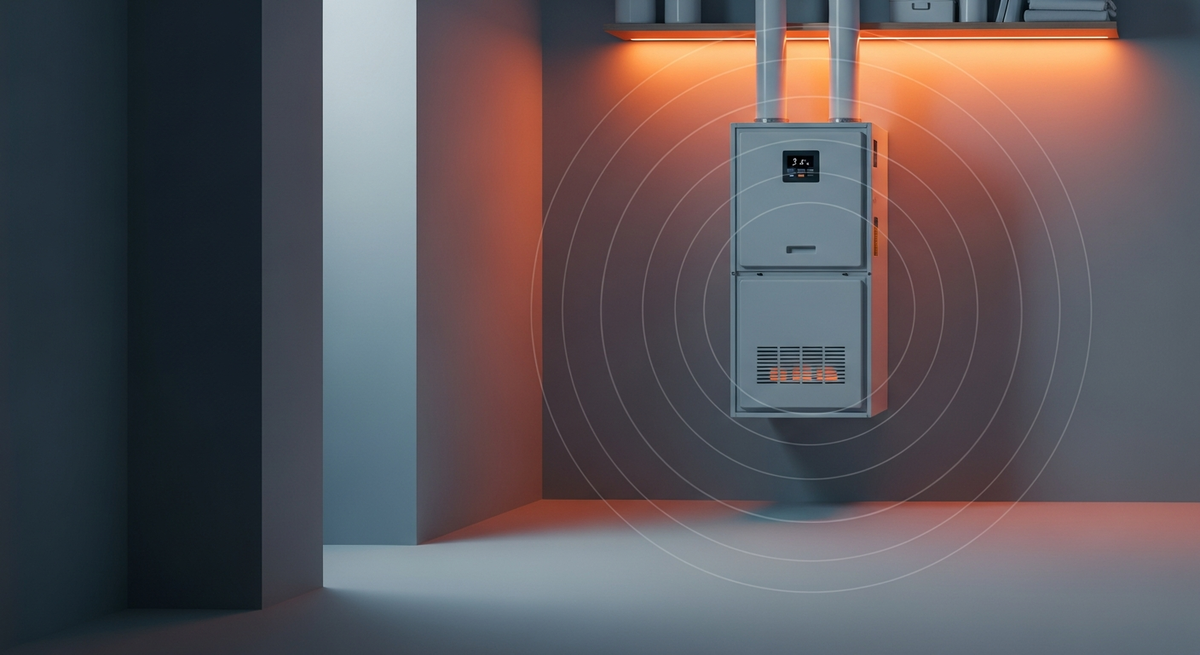
A furnace is supposed to be a background appliance. You set the thermostat, you hear a soft whoosh of warm air, and you forget it exists. So when it suddenly starts banging, squealing, or rattling, it gets your attention fast. The good news is that furnaces tend to tell you what is wrong through the specific sound they make. A bang is a very different problem from a squeal, and a rattle is different from a grind.
Below is a breakdown of every common furnace noise, what it usually means, how urgent it is, and whether it is something you can handle yourself. I have spent enough cold mornings in basements chasing these sounds to know which ones can wait until morning and which ones mean shut it down now.
Quick answer
A single soft click or a brief whoosh at startup is normal. A loud bang or boom usually means delayed ignition and needs prompt attention. Squealing points to the blower motor or belt. Grinding metal means shut it off now. Rattling is often loose panels or ductwork. If you ever smell gas or your carbon monoxide alarm sounds, leave the house and call your gas utility or 911.
Furnace Noise Cheat Sheet
Start here. Match the sound to the most likely cause, then read the detailed section below for what to do.
| Sound | Most Likely Cause | Urgency |
|---|---|---|
| Bang or boom at startup | Delayed ignition, dirty burners | High, call soon |
| Squeal or screech | Worn blower bearing or slipping belt | Medium |
| Grinding metal on metal | Failed blower motor bearing or loose wheel | Urgent, shut it off |
| Rattling or vibrating | Loose panel, ductwork, or screws | Low to medium |
| Clicking with no ignition | Ignitor, flame sensor, or gas valve | Medium, no heat |
| Loud humming or buzzing | Capacitor, transformer, or straining motor | Medium |
| Whistling | Clogged filter, closed vents, duct leak | Low, easy fix first |
| Rumbling when burners are off | Dirty burners or pilot problem | Medium |
Repair or replace?
Compare free quotes from licensed contractors near you.
Banging or Booming at Startup
This is the noise that worries homeowners most, and rightly so. A loud bang or boom right when the furnace fires usually means delayed ignition. Gas flows into the burners but does not light immediately. While it waits, a small cloud of gas builds up, and when it finally ignites it all goes at once. That small contained explosion is the boom you hear.
The usual culprits are dirty burners, a weak or dirty ignitor, or low gas pressure. None of these are things to live with. Repeated delayed ignition puts stress on the heat exchanger, and a cracked heat exchanger is both an expensive repair and a carbon monoxide risk. Turn the system off and have a technician clean the burners and check the ignition sequence.
One more banging cause that is not dangerous: popping or banging from the ductwork as it heats up and cools down. Metal ducts expand when warm air rushes in and contract when the furnace shuts off. If the bang comes from the ducts rather than the furnace cabinet, and only happens as the system cycles on and off, it is usually a minor airflow or duct-gauge issue rather than a combustion problem.
Squealing or Screeching
A high-pitched squeal almost always traces back to the blower assembly. On newer furnaces with a direct-drive blower, it is usually a worn motor bearing. On older units with a belt-driven blower, it is often a slipping or cracked belt. Either way, the sound tends to get louder over weeks as the part wears down.
This is not an emergency, but do not let it slide. A bearing that squeals today can seize next month, and a seized blower means no heat at all. Replacing a belt is inexpensive. Replacing a blower motor is a bigger job but far cheaper than the damage a failed motor can cause. If your furnace is older, this is a good moment to look up the system age and weigh repair against replacement.
Repair or replace?
Compare free quotes from licensed contractors near you.
Grinding Metal on Metal
If you hear a harsh metallic grinding, treat it as urgent and shut the furnace off. Grinding usually means the blower motor bearings have failed completely, or the blower wheel has come loose and is scraping against the housing. Running the furnace in this state can quickly destroy the motor and the blower wheel together, turning a moderate repair into a major one.
There is nothing safe to DIY here. Switch the system off at the thermostat, and if you are comfortable doing so, cut power at the furnace switch or breaker to stop the blower from running. Then call a heating technician.
Rattling or Vibrating
Rattling is the most common furnace noise and usually the least serious. Furnace cabinets have removable access panels held by screws, and those screws loosen over time from normal vibration. A loose panel will buzz and rattle every time the blower runs. Check that all panels are seated and the screws are snug.
If the panels are tight, the rattle may be coming from ductwork that is loose or touching a joist, or from a small object that fell into a return vent. A persistent rattle that you cannot trace to a panel or duct can sometimes signal a cracked heat exchanger, especially if it changes pitch when the burners light. If a simple panel and duct check does not solve it, have a technician inspect the heat exchanger to rule that out.
Clicking With No Ignition
Repeated clicking followed by no warm air is the sound of a furnace trying and failing to light. The click is the ignition system attempting to start the burners. Common causes are a cracked hot surface ignitor, a dirty flame sensor that cannot confirm the flame, or a failing gas valve.
A dirty flame sensor is one of the few items a handy homeowner can clean. With the power off, the thin metal sensor rod near the burners can be gently cleaned with fine emery cloth. If cleaning the sensor does not restore ignition, or if you are not comfortable working near the gas valve and burners, this is a job for a professional. Do not keep forcing repeated ignition attempts, as raw gas can accumulate.
Loud Humming or Buzzing
A faint hum from a running furnace is normal. A loud, persistent hum or buzz is not. The usual sources are an electrical component such as a failing capacitor or transformer, or a blower motor that is straining against restricted airflow. A buzzing transformer or a swollen capacitor needs a technician. A straining motor sometimes traces back to something as simple as a clogged filter choking the airflow, so check the filter first.
Whistling
Whistling is almost always an airflow problem, and airflow problems often have free fixes. Start with the filter. A clogged filter forces the blower to pull air through any gap it can find, which creates that whistle at the return grille. Replace it and see if the sound stops. Next, make sure supply vents around the house are open and not blocked by furniture or rugs. Closing too many vents raises duct pressure and causes whistling. If the filter and vents are clear, you may have a leak or undersized return duct that a technician can address.
Rumbling When the Burners Are Off
A low rumble that continues after the burners shut down often points to dirty burners or, on older furnaces, a pilot light that is not burning cleanly. Soot and debris on the burners disrupt the flame and can cause a rumbling combustion sound. This is worth a service call, both for efficiency and because incomplete combustion can produce carbon monoxide.
Safety first
Any gas furnace can produce carbon monoxide if combustion goes wrong. Keep a working carbon monoxide alarm near sleeping areas. If you smell gas, hear hissing, or your alarm sounds, do not investigate the furnace yourself. Leave the house and call your gas utility or 911. The U.S. Consumer Product Safety Commission has more on carbon monoxide safety.
How Old Is Your Furnace?
Age changes how you should respond to many of these noises. A squealing blower on a 6-year-old furnace is a simple repair. The same squeal on an 18-year-old furnace is a signal to start planning a replacement, because more failures are coming. Most gas furnaces last 15 to 20 years.
If you are not sure how old yours is, use our free HVAC age lookup tool to decode the serial number on the furnace data plate. Knowing the real manufacture date helps you decide whether a noisy part is worth fixing or whether it is time to read our guide on repairing versus replacing aging HVAC equipment. You can also look up your specific brand, such as Carrier, Trane, Goodman, or Lennox, for brand-specific guidance.
The Bottom Line
Furnace noises are a language. A bang means combustion, a squeal means the blower, a grind means stop now, and a whistle usually means a five-dollar filter. Match the sound to the cause, handle the easy airflow fixes yourself, and bring in a professional for anything involving the burners, the heat exchanger, or a motor that is grinding. When in doubt about safety, shut it down. A cold house for one night is always cheaper than the alternative.