
Signs Your Ductwork Is Leaking (And What to Do About It)
Ductwork problems look like equipment problems. Here's how to tell the difference, what to inspect yourself, and when a professional duct test is worth it.
_1779220400871-BTmzb4Mz.jpg)
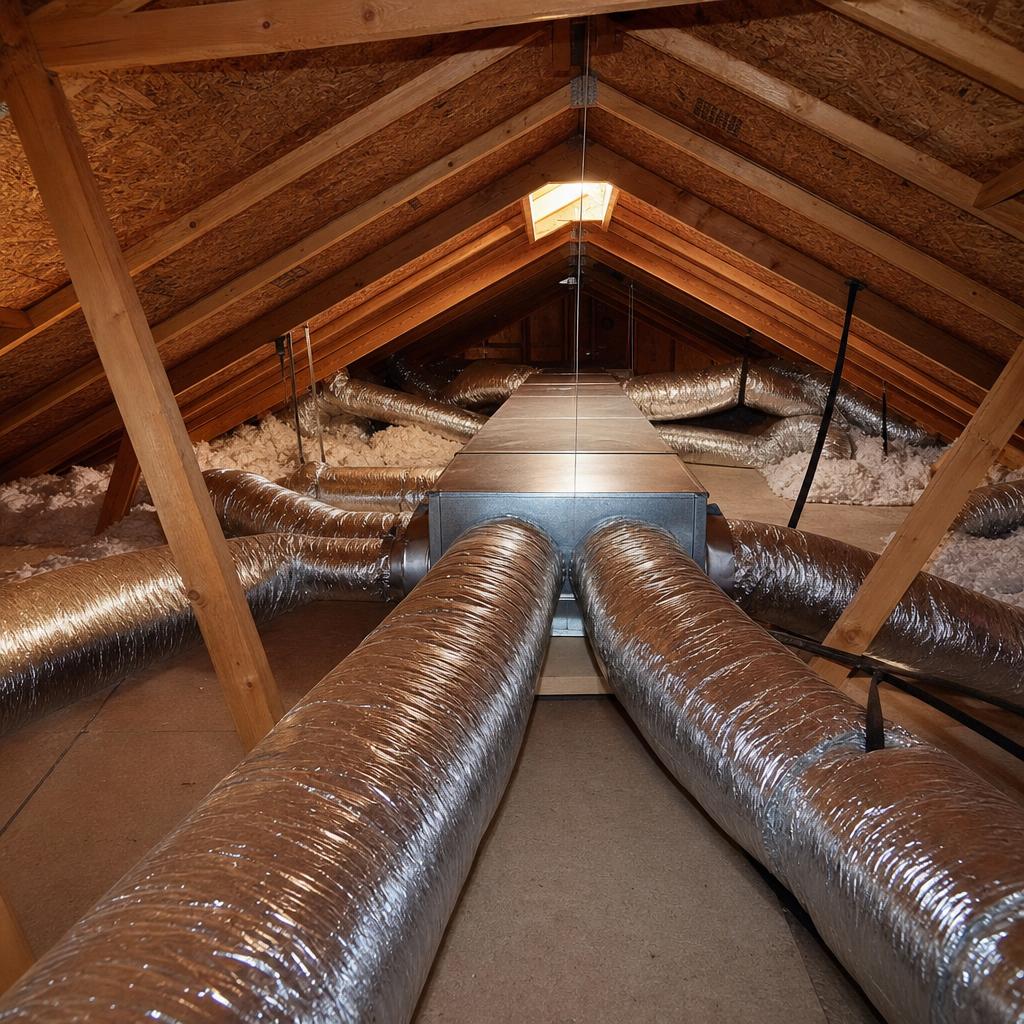
The system passed its tune-up. Refrigerant charge was good, coils were clean, the capacitor tested fine. But the bedroom at the end of the hallway ran 8 degrees warmer than the thermostat setpoint, and had been for years. Nobody had looked at the ductwork. A flex duct had partially pulled off a trunk line in the attic, dumping conditioned air into a 130-degree space instead of the room.
Ductwork problems look like equipment problems. High bills, rooms that won't cool, a system that runs constantly. Those get blamed on the unit first, and that's where most technicians look. When the unit checks out and the symptoms persist, the ducts are next.
Quick answer
The most common signs: one room that's consistently off-temperature regardless of season, cooling bills that have crept up on a system that otherwise checks out, and supply registers with noticeably weaker airflow than others. You can do a useful visual check yourself if your ducts are accessible. For an exact leak number, a professional duct blaster test ($150 to $350) tells you how much conditioned air you're losing and where.
How to Inspect Your Ductwork Yourself
Start at the registers. Run your hand around the frame of each supply and return register while the system is running. Supply registers push air out; return registers pull it in. A return register under negative pressure will draw air through any gap between the boot and the ceiling or wall. You'll feel a draft at the edge even though the register itself appears fine. Brownish or gray staining around a return register is the same problem made visible: that's years of dust being pulled through a gap in the duct connection.
If your ducts are accessible in an attic, crawlspace, or basement, walk the runs and check every junction. Where flex duct connects to a sheet metal collar or trunk, the connection should be secured with a metal band clamp and sealed with mastic or foil tape. Look for any pull-back: a connection where the inner liner has separated from the fitting while the outer insulation jacket still looks intact from a distance. It's easy to miss.
Also look at the condition of the flex duct itself. Tears in the outer foil jacket mean the insulation layer is exposed to the surrounding air, which costs BTUs even with no actual air leak. Kinked flex duct (bent sharply at a 90-degree turn, or compressed by something resting on it) cuts airflow without any visible breach. A duct that should be delivering 150 CFM can deliver half that through a single hard kink.
Repair or replace?
Compare free quotes from licensed contractors near you.
HVAC Symptoms That Are Actually Duct Problems
One room that's always off-temperature is the most specific sign. If a bedroom or bonus room consistently runs hot in summer and cold in winter regardless of how long the system runs, and the problem is limited to that room, the duct branch serving it is the first place to look. The duct could be disconnected, kinked, undersized, or have a balancing damper that was closed during a renovation and never reopened.
Gradually rising cooling bills are harder to attribute, but worth investigating. Duct deterioration is slow. You won't notice a single bad year, but a five-year trend on a system that has otherwise checked out is a reason to pull the attic hatch and look around.
When the system takes noticeably longer to reach the setpoint than it used to, on a day that isn't unusually hot, it's conditioning air that escapes before reaching the room. The equipment works fine; the delivery system is losing product.
Humidity is a subtler signal, and easier to miss. Supply duct leaks reduce airflow without reducing runtime. The system runs its full cycle but doesn't move enough air across the evaporator coil to wring out moisture effectively. If a room feels muggy even when the AC is running steadily, weak airflow from that duct is worth checking before assuming the system is undersized.
Repair or replace?
Compare free quotes from licensed contractors near you.
How Long Does Ductwork Last?
Flex duct has a typical lifespan of 15 to 25 years. The connections at each end are the most common failure point; the inner liner can pull away from the fitting over time while the outer jacket looks intact. Sheet metal can last 50 years or more, but seams and joints can open through repeated expansion and contraction, especially in climates with large seasonal temperature swings. Duct board (rigid fiberglass panels) falls between the two, usually lasting 20 to 30 years, and degrades faster when exposed to moisture.
Age alone doesn't tell you much. A 20-year-old flex duct in a conditioned basement in a mild climate may be fine. A 10-year-old flex duct in a hot attic that was never properly supported may be kinked at half a dozen points. The condition of the accessible sections, and whether symptoms are present, matters more than the install date.
Why Attic Ductwork Loses Efficiency Even Without Leaks
There's a version of this problem that has nothing to do with leaks. Ductwork running through an unconditioned attic in summer is passing 55°F air through a space that can reach 120 to 140°F. Even well-sealed, insulated duct picks up heat from the surrounding air through the duct walls. The insulation slows this but doesn't stop it.
Two otherwise identical systems can have meaningfully different operating costs depending on where the ducts run. A system with ducts inside conditioned space (inside the thermal envelope) has a structural efficiency advantage over one with attic ducts, separate from any question of leakage.
If your attic ductwork insulation is torn, missing sections, or the foil vapor barrier is compromised, adding or replacing insulation is worth doing even if a duct blaster test comes back clean. It's the cheaper fix and it matters.
What Is a Duct Blaster Test?
A duct blaster test works by sealing all the registers, connecting a calibrated fan to the duct system, and pressurizing it to 25 Pascals. The airflow the fan needs to maintain that pressure is a direct measure of how much air the system is leaking. A technician can also do this with the house depressurized via a blower door at the same time, which separates duct leakage to outside (the number that matters most) from leakage that stays within the conditioned space.
ENERGY STAR targets less than 4 CFM per 100 square feet of conditioned floor area for leakage to outside. Most existing houses test between 15 and 30 percent total leakage. That means 15 to 30 percent of conditioned air never reaches the room it was intended for. The test also uses a pressure pan (a cover placed over each register) to locate which branches are leaking most, so sealing work can be prioritized.
A standalone duct leakage test runs $150 to $350. Many HVAC contractors include it as part of an energy audit. It's worth doing before committing to a sealing job because it tells you how bad the problem actually is and whether the savings will actually justify the cost.
Duct Sealing vs. Replacement: When Each Makes Sense
Sealing makes sense when the ductwork is structurally sound and the leaks are at connections and joints. The standard material is mastic sealant, a thick paste brushed onto duct joints that cures into a durable flexible coating lasting 20 years or more. For larger gaps, fiberglass mesh tape embedded in the mastic bridges the gap before it cures. This is what a contractor does when they seal your ducts.
Don't use duct tape on ducts
The product called "duct tape" is not rated for HVAC temperatures and fails within a few years in an attic environment. The right materials are mastic sealant (for joints and connections) or UL 181-rated foil tape (for surface repairs). If you see silver fabric tape on ductwork in an older home, there's a good chance it's already peeling.
Aeroseal is an alternative that injects sealant into the pressurized duct system from the inside, depositing at leak points you can't physically reach. It runs $1,500 to $4,000 for a whole house, more than manual mastic, but it can address leaks inside walls or at inaccessible trunk connections. For a home where sealing tests show a lot of distributed small leaks rather than a few large ones, Aeroseal is often the more practical option.
Replacement makes more sense when flex duct is past its lifespan, extensively kinked, or when a renovation already opens up the ceiling or wall. If you're re-roofing, finishing an attic, or gutting a space anyway, replacing the ductwork at the same time costs a fraction of what it would as a standalone project.
How to Fix Leaky Ductwork: First Steps
Pull the attic hatch and spend 20 minutes looking at connections. You're looking for visible pull-backs, tears in insulation, hard kinks, and anything that doesn't look like a solid sealed joint. If you find obvious problems, fix them with mastic before spending money on a test. If everything looks intact but symptoms persist, a duct blaster test will tell you whether the leakage is significant enough to address professionally or whether the problem is somewhere else.
If the ductwork looks rough and the system is more than 15 years old, get bids for both sealing and replacement. The gap between them is often smaller than expected once a contractor is already up in the attic.