
What Voids Your HVAC Warranty (And What Doesn't)
Your HVAC warranty can silently drop from 10 years to 5 over a missed form. Here's what actually voids it, what doesn't, and what to do if you're already exposed.
_1779220400871-BTmzb4Mz.jpg)
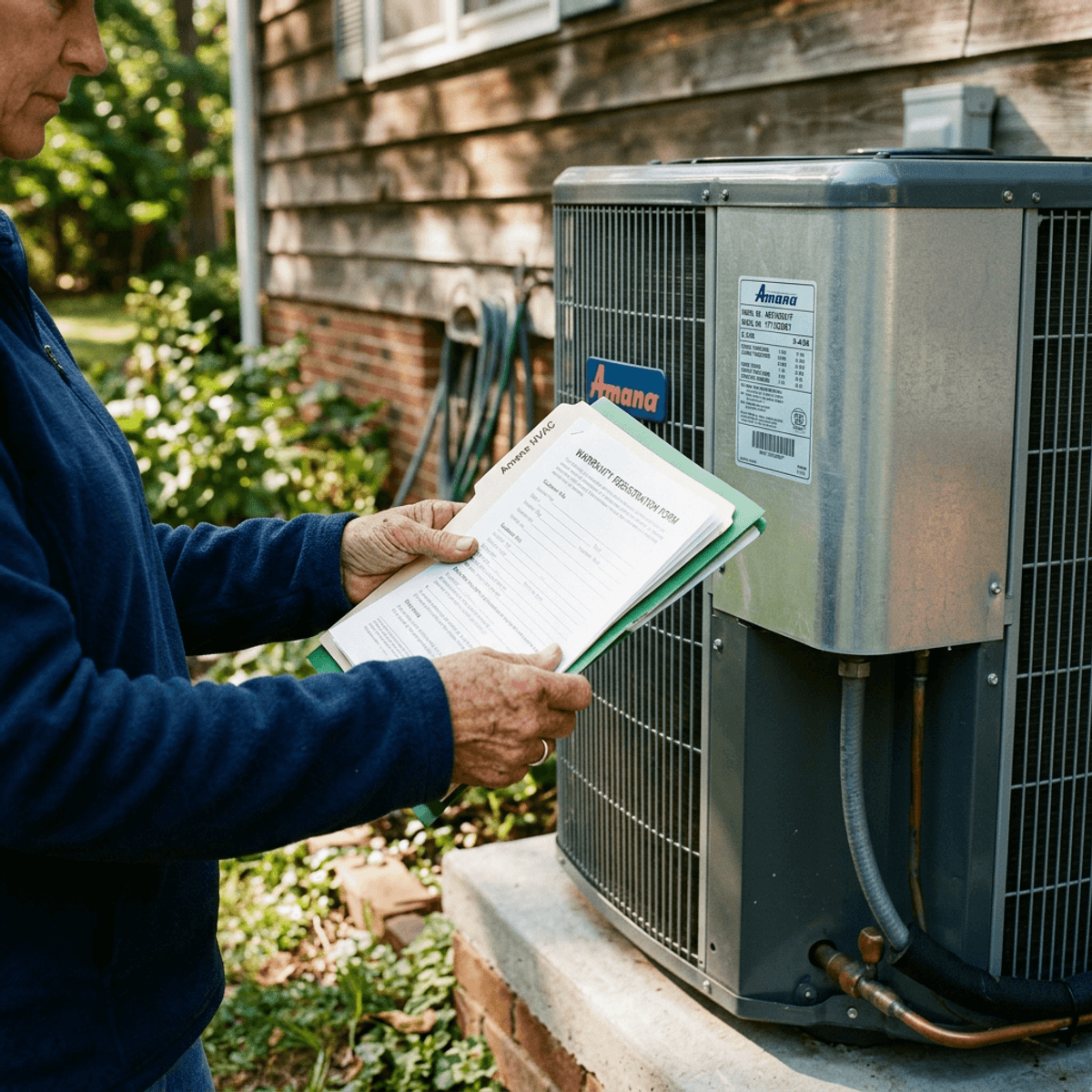
I get some version of this call every few months. A compressor fails in year six, the homeowner remembers hearing "10-year warranty" at the sale, and they call expecting a free part. The manufacturer pulls the file and finds no registration on record, so the term that actually applies is the base one, five years, and it expired last year. That's not a rare story. It's close to the most common warranty denial in the business, and the cause is almost never a hidden clause. It's a missed form.
Quick answer
The two things that actually void or shrink HVAC warranty coverage are missing the registration deadline (typically 60 to 90 days after installation, and it can cut a 10-year term to 5) and an install or repair history that skips a licensed contractor or documented maintenance. Selling the house, hiring a different repair company, or getting a second opinion do not void anything on their own. Check your brand's exact terms and your unit's real status with our free warranty guide. Already in a tough spot? Skip to the callout below.
HVAC Warranty Registration: What Happens If You Miss the Deadline
Across the manufacturer terms we track, the same pattern repeats: register within 60 to 90 days of installation and parts coverage runs 10 years. Miss that window and it drops to 5, sometimes fewer. Nobody calls to remind you. The installer who mentioned it once during a two-hour visit isn't going to follow up in month two, and the postcard reminder that used to come with the paperwork went away when most manufacturers moved registration online.
Two things trip people up here. The clock starts at the installation date, not the date the unit was manufactured or purchased, so a unit that sat in a distributor's warehouse for eight months before your install date doesn't cost you any coverage. And registration is almost always the homeowner's job, not the installer's, even though plenty of people assume it happened automatically as part of the sale.
What to do: register the moment the system is running, using the model and serial numbers off the data plate. Set a reminder in your phone for 30 days after install as a backup nudge in case you forget that first day. If you've already missed the window, don't assume it's too late. The callout below walks through what's actually worth trying.
Repair or replace?
Compare free quotes from licensed contractors near you.
Does a DIY or Unlicensed HVAC Install Void the Warranty?
Nearly every manufacturer warranty requires installation by a licensed HVAC contractor. A system you or a handy neighbor put in yourselves isn't covered, regardless of how clean the job looks. That's not manufacturers being precious about who touches their equipment. Refrigerant charge, airflow setup, and electrical connections all affect whether a compressor lasts 15 years or fails in 2, and a poorly commissioned system fails in ways that look identical to a defective part from the outside. Good luck proving which one it actually was after the fact.
A few brands, mostly the ductless mini-split makers like Mitsubishi, Fujitsu, and Gree, take this further. The standard registered term just requires a licensed contractor, but the longest terms, sometimes 12 years instead of 10, require installation by a manufacturer-certified dealer specifically. If a company advertises "certified" or "elite" installer status, that badge is usually what unlocks the top-tier warranty, not just marketing.
How Skipped Maintenance Can Get a Warranty Claim Denied
Many manufacturer warranties are conditioned on documented annual maintenance, and that phrase means what it sounds like: no records, no guaranteed claim. If a compressor fails and the manufacturer's adjuster finds a filter that hasn't been changed in two years or a coil caked in enough dirt to choke airflow, they have a straightforward case that neglect caused the failure, not a manufacturing defect. That argument holds up. Warranties cover defects. They were never designed to cover damage caused by skipping upkeep.
Keep the invoice from every tune-up, even the $89 spring special. It's the only proof you have if a claim ever gets questioned. Our maintenance checklist covers what a real annual visit should include.
Mismatched Parts, Systems, and Refrigerant
Pairing a new condenser with an old, mismatched indoor coil, using non-OEM parts on a repair, or charging a system with anything other than its designed refrigerant can each void coverage on their own. Manufacturers publish AHRI-matched system combinations for a reason: an outdoor unit and indoor coil that were never tested as a pair can undercharge, overwork the compressor, or simply miss the performance numbers the warranty assumes. A contractor steering you toward a quick "compatible" swap rather than a properly matched replacement is worth scrutinizing. Our guide to HVAC contractor red flags covers how that pressure tactic typically plays out.
What Happens When You Can't Prove Your Install Date
Manufacturers need two dates to evaluate any warranty claim: the manufacture date, which is encoded in the serial number, and the installation date, which is supposed to come from you in the form of an installer invoice or pulled permit. The manufacture date is the easy part: that's what our age lookup tool pulls from the serial. The install date is where things quietly unravel for a lot of homeowners.
When you can't produce an install date, most manufacturers fall back to the manufacture date and add a short grace period to estimate roughly when installation happened. That fallback sounds reasonable until you do the math. A unit that spent six to eight months sitting in a distributor's warehouse before your install (which is entirely normal) eats directly into your effective coverage window. A compressor you thought was covered through 2032 might only run through 2031 under the fallback calculation, and nobody will tell you that until a claim comes in.
If you've lost your paperwork, a few places are worth checking before giving up: contact the original installer directly (legitimate contractors typically keep job records for several years), search your email for any appointment confirmation or invoice PDF, and check with your local building department if a permit was pulled. Even a dated photo from installation day on your phone can help establish a timeline if a claim ever comes down to it.
| Factor | Effect on Coverage | How to Avoid It |
|---|---|---|
| Missing the registration deadline | Term drops from ~10 years to ~5 | Register within 60 to 90 days of install; set a phone reminder |
| DIY or unlicensed install | Coverage never starts | Use a licensed contractor, get their license number in writing |
| No maintenance records | Claims can be denied as neglect | Save every tune-up invoice, even minor ones |
| Mismatched or non-OEM parts | Coverage voided on the mismatched components | Ask for AHRI-matched systems and OEM parts only |
| Lost proof of install date | Falls back to manufacture date, shortens the effective term | Keep the installer's dated invoice in a dedicated folder |
Already in one of these situations?
If you've missed the registration deadline, can't locate your install paperwork, or just found out your install was unlicensed, it's worth trying a few things before assuming you have no coverage at all.
- Call the manufacturer directly (not the dealer, not the call center; ask for dealer relations or the regional rep). Many will extend the registration window if you can show a dated installer invoice. They have more discretion than frontline support agents suggest.
- Ask your contractor for a retroactive commissioning report. A signed, dated document from a licensed contractor doesn't restore a missed registration window, but it can help push back on a denial that cites "unlicensed installation" as the cause.
- Check for a building permit. If a permit was pulled for your installation, your local building department has a dated record of it. That's a legitimate install-date document even if the original invoice is gone.
Repair or replace?
Compare free quotes from licensed contractors near you.
Does Selling Your House Void the HVAC Warranty?
A home sale isn't one of the things that voids a warranty, but it does reset it in most cases. Some manufacturers let coverage follow the unit at full strength no matter who owns the house. Others make the new owner file paperwork and pay a transfer fee shortly after closing, or the warranty just quietly reverts to the shorter base term. A handful don't allow a transfer at all. It really does vary brand to brand that much. If you're buying a home with an HVAC system already in place, don't assume the seller's registered warranty is yours. Check the specific brand's transfer policy on our warranty guide, and more importantly, verify the manufacture date yourself instead of trusting whatever age the listing states.
Manufacturer Warranties vs. Extended Service Contracts
These are not the same product and the confusion costs homeowners money in both directions. The manufacturer's warranty covers defects in the parts themselves. It comes with the equipment at no extra charge, runs from the installation date, and is everything this article is about. If a compressor fails because it was defective, the manufacturer replaces the part under warranty.
An extended service contract (also called a home warranty plan, HVAC protection plan, or service agreement) is a separate paid product, usually from a third party like a home warranty company or your local contractor's own service plan. These contracts can be genuinely useful: some cover labor costs that manufacturer warranties never touch, some cover older systems past their original terms, and some bundle in annual maintenance visits. But they have their own claim processes, deductibles, and exclusions that have nothing to do with the manufacturer's terms. Getting denied under one doesn't affect the other, and vice versa.
If you're not sure which you have, the simplest test: are you paying a monthly or annual fee for it? If yes, it's a service contract. If it was simply included when the equipment was installed and you haven't paid anything since, that's the manufacturer's warranty. Worth knowing the difference before you file a claim with the wrong party and lose time in a busy summer week waiting for a call back.
What Doesn't Actually Void Your Warranty
Using a different repair company than the one that installed the system. The manufacturer's parts warranty isn't tied to a specific contractor. Any licensed company can perform warranty-covered repairs. What you lose by switching companies is any separate labor guarantee your original installer personally offered, which is a different thing from the manufacturer's warranty on parts.
Getting a second opinion. Having another company inspect or diagnose the system doesn't touch the manufacturer's coverage at all. It's your equipment and your call to get as many opinions as you want.
Normal wear items. Filters, thermostat batteries, and the wear you'd expect after years of runtime were never warranty issues to begin with, so replacing them yourself never put your coverage at risk.
How to Check Your HVAC Warranty Status Right Now
None of this matters if you don't know your unit's manufacture date, your registration status, or which of these patterns your specific brand follows. Run your serial number through our free HVAC age lookup to confirm the manufacture date, then look up your brand's exact terms, registration window, and transfer policy on our warranty guide. Both take under a minute, and both are the difference between finding out you're covered before something fails instead of after.
Warranty coverage is one of the few homeownership costs that's entirely avoidable to lose. Nobody can stop a compressor from failing on its own schedule, but everybody can register on time, hire a licensed contractor, and keep a folder of invoices. Do those three things and the fine print stops being something to worry about.